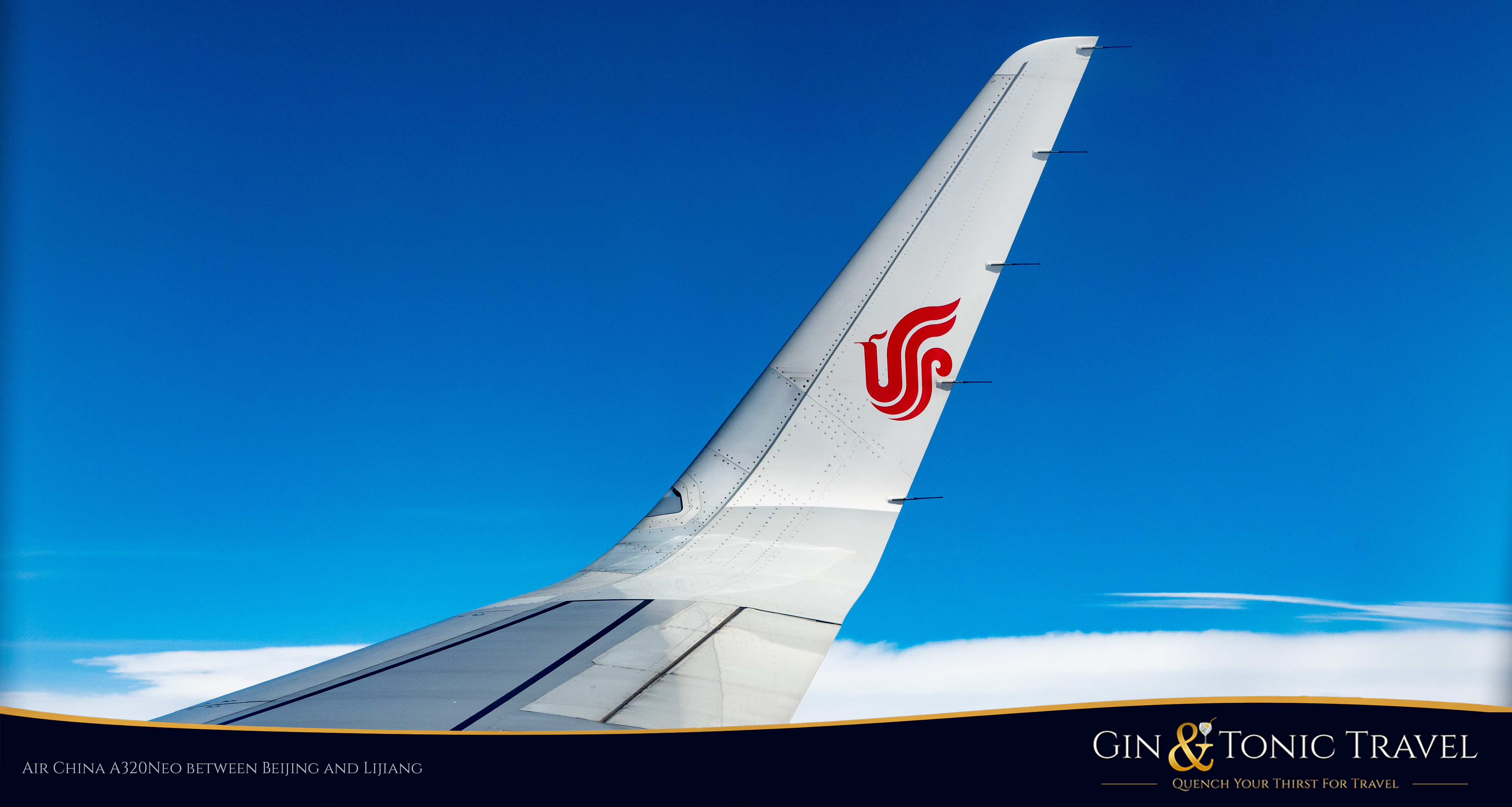
Our First-Hand Guide to Airports, Airlines & Entry Procedures for Air Travellers to China.
"China's aviation system turned out to be one of the biggest surprises of our journey—not because it was different, but because it was so much better than we expected."
For many travellers, China still feels like one of the last great unknowns. Every time we mention the country to clients, the same questions quickly follow.
"Is it difficult to enter?"
"Are the airports confusing?"
"Is flying domestically safe?"
"Will everything be in Chinese?"
"Do they still serve food on domestic flights?"
After spending more than two weeks travelling through China—from the futuristic skyline of Shanghai to the mountains of Tibet—we can confidently say that China's aviation system deserves far more credit than it receives.
During our journey we entered China through Beijing Daxing International Airport, flew multiple domestic sectors with Air China and China Eastern Airlines, visited six major airports and departed from Shanghai Pudong International Airport.
Along the way we experienced Business Class, domestic Economy Class, biometric immigration, facial-recognition security, airline lounges, regional inflight catering, and several of the world's largest airport terminals.
Was everything perfect?
No.
Was it efficient?
Exceptionally so.
If you're considering China as your next destination, here's exactly what you can expect.
Flying in China at a Glance
10 Things That Surprised Us About Flying in China
1. Entering China Was Remarkably Straightforward
Our journey began in Frankfurt aboard Air China Flight CA958 to Beijing Daxing, operated by a Boeing 777-300ER .It was our first experience with Air China.
Like many travellers, we'd heard plenty of opinions before travelling—some positive, others less so.
Within a few hours, many of those assumptions had disappeared.
The aircraft itself was clean, modern and well maintained, while the Business Class cabin felt fresh and comfortable for the long overnight flight to Beijing.
The service: Rather than being overly familiar or highly polished in the North American sense, the cabin crew were quietly professional. They worked methodically, efficiently and always with genuine courtesy. One very nice touch - welcome slippers - we were back in Asia!
One interaction perfectly captured that style: After dinner, I asked for a cognac. The flight attendant paused for a moment, lacking some English and looking slightly puzzled. Rather than guessing, she disappeared into the galley before returning with the drinks menu. I pointed to the cognac.
She smiled.: "Ah... VSOP. OK. Ice also?"
It was a small moment, but one that reflected the service culture we would encounter repeatedly throughout China. If something wasn't immediately understood, staff simply clarified it. No assumptions. No embarrassment. Just friendly professionalism.
The Business Class meal itself was very good but not exceptional, offering both Chinese and Western choices well presented with careful attention to detail.
Arriving at Beijing Daxing
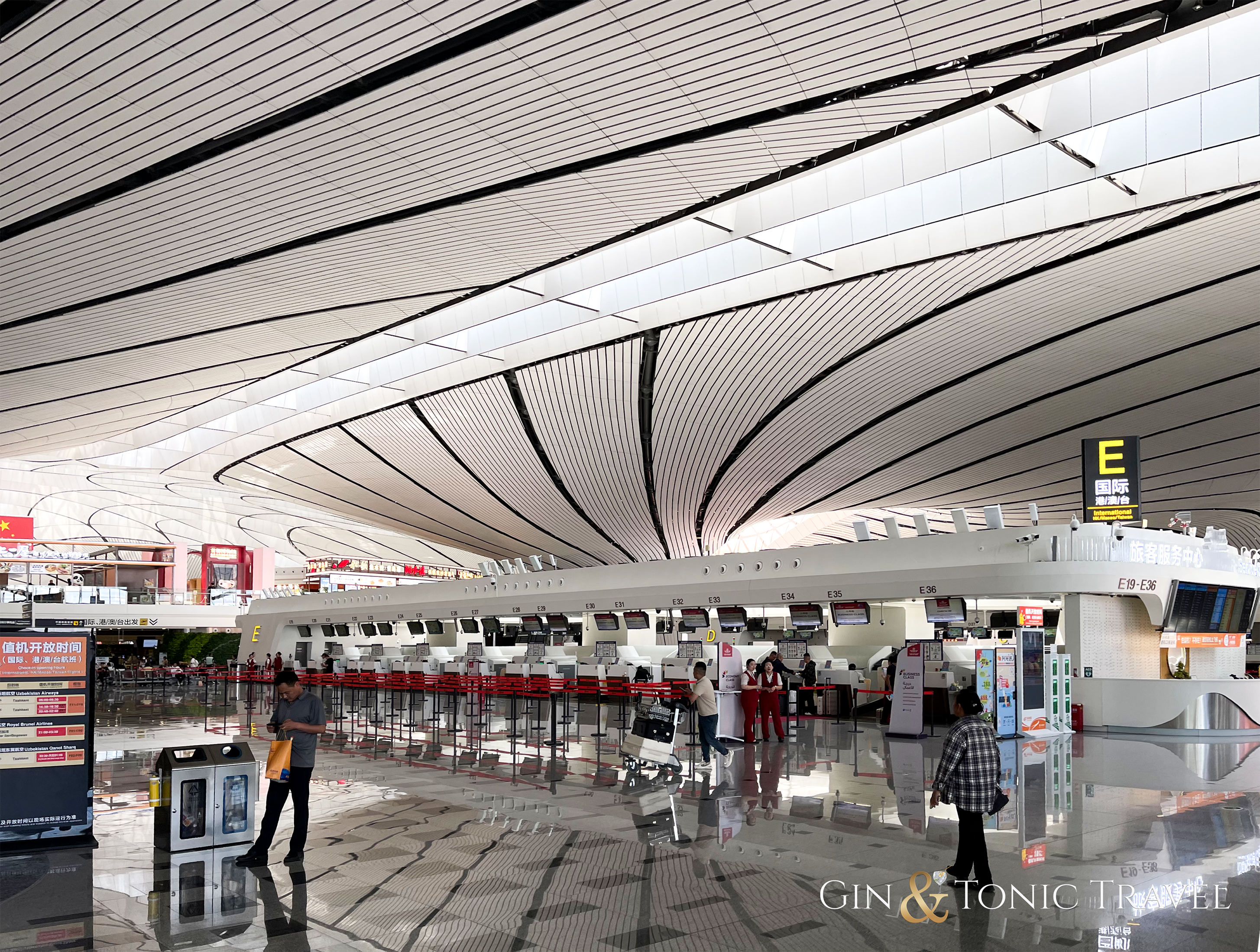
Nothing quite prepares you for your first glimpse of Beijing Daxing International Airport.
Often described as one of the world's most impressive airport terminals, Daxing feels more like a futuristic transportation hub than a traditional airport.Its sweeping architecture and enormous open spaces somehow manage to feel welcoming rather than overwhelming.
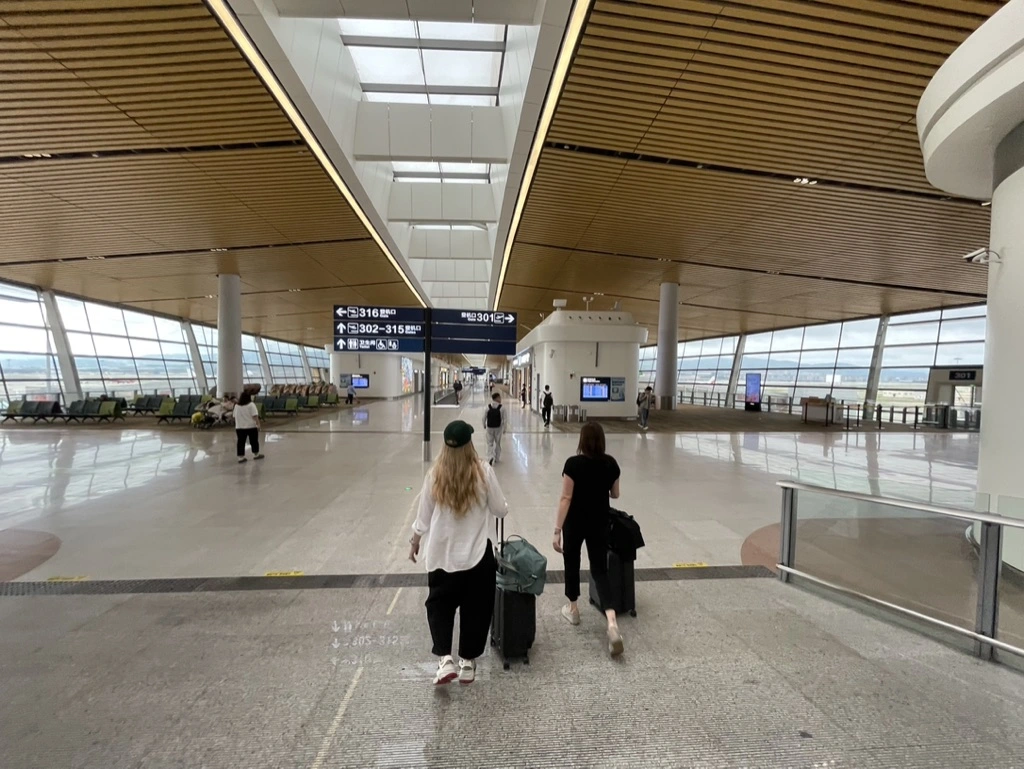
Signage in both Chinese and English made navigation surprisingly easy. Even after a long overnight flight, finding immigration required a long walk but little further effort.
Visa-Free Entry
One question we receive regularly at Gin & Tonic Travel concerns visas.
At the time of our visit, neither of us required one.As an EU passport holder, I entered China under the current visa-free arrangements.My wife, travelling on her Canadian passport, also qualified for visa-free entry.
It's worth emphasizing that immigration rules change regularly, so always verify the latest requirements before you travel.
Completing China's online arrival declaration a couple of days before departure proved worthwhile. By the time we reached immigration, officials already had our information available in their system.
Biometric Immigration
Before reaching passport control, travellers first visit automated biometric stations. These record fingerprints and complete a facial recognition scan before directing passengers toward immigration - In theory.
Reality was slightly different. Neither machine particularly liked us. Despite several attempts, both fingerprint and facial recognition struggled to complete successfully. It didn't matter.
An immigration officer simply invited us forward, checked our passports, located our electronic arrival declaration, asked a couple of routine questions and welcomed us into China.
The whole process was calm, orderly and surprisingly efficient.
If you're worried about entering China, don't be.
Our experience was considerably less time-consuming than entering several other countries we've visited in recent years.
2. China's Airports Are Immaculately Clean
One observation stayed with us throughout our entire journey.
Every airport was spotless, Not just the newest airports.Every airport.
From departure lounges to washrooms, boarding gates, security areas and baggage halls, cleanliness appeared to be taken exceptionally seriously.Whether we were passing through Beijing, Kunming, Lhasa or Shanghai, there was a noticeable sense of order.
Floors gleamed, Airport washrooms were continually attended, public spaces remained uncluttered despite the enormous number of passengers moving through them.
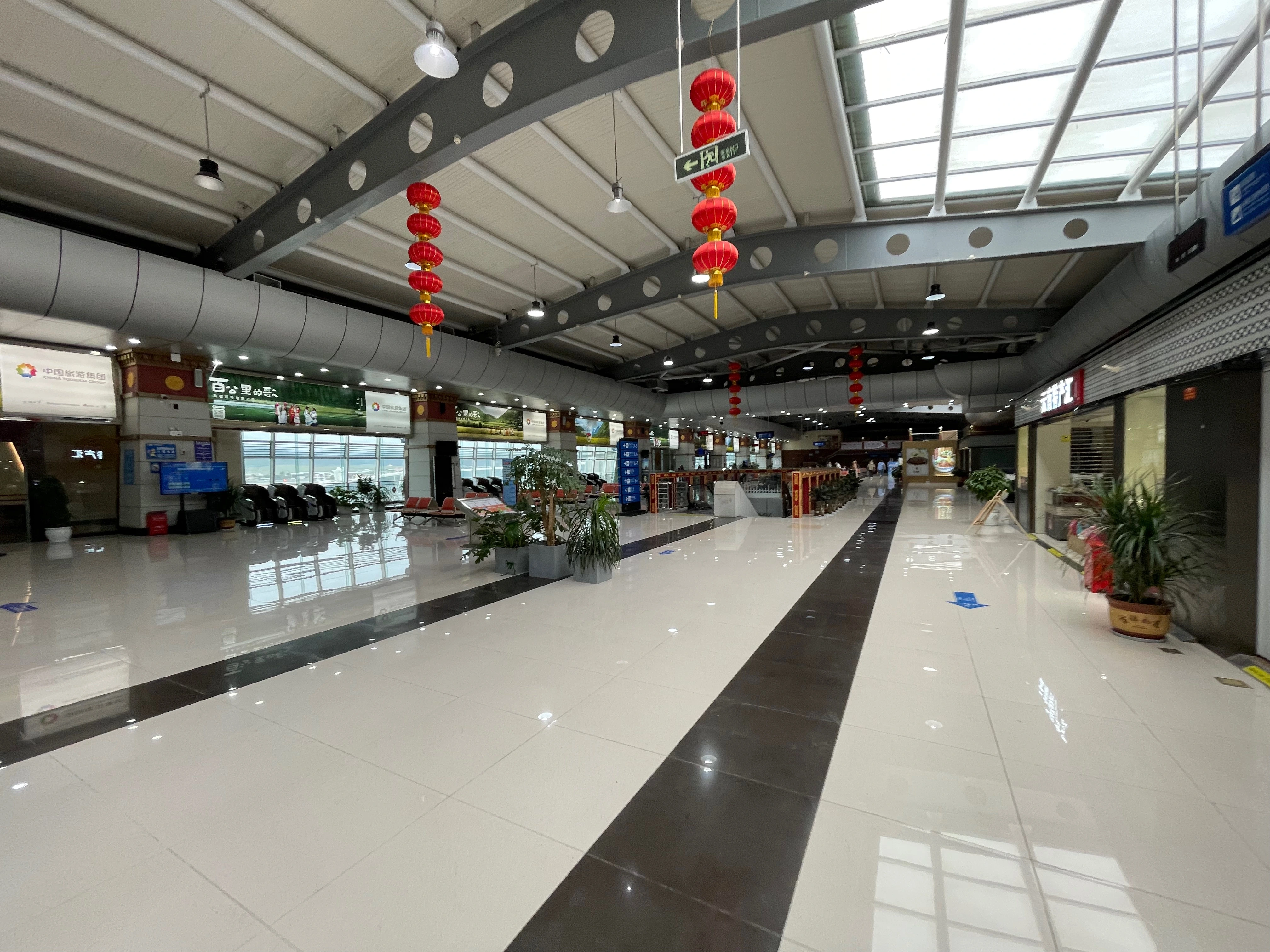
It's one of those details you don't fully appreciate until you've experienced several airports over the course of a trip.
China consistently impressed us.
3. Domestic Flying Is Surprisingly Easy
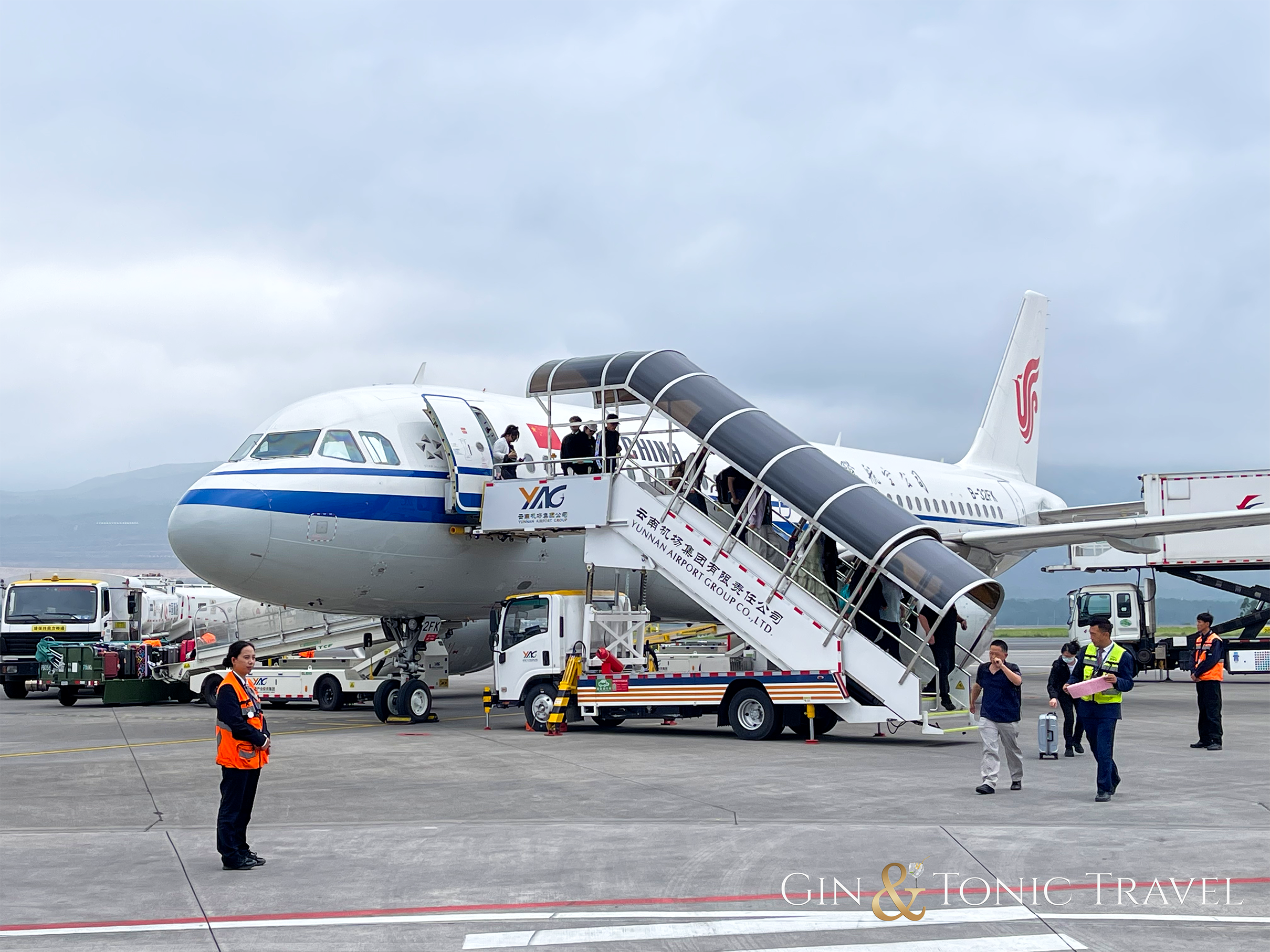
Three days after arriving in Beijing, we transferred to Beijing Capital International Airport for our first domestic flight.
Our destination? The UNESCO-listed old town of Lijiang, deep in Yunnan Province.
The flight was operated by Air China aboard an Airbus A320 and like all of our domestic flights in China, we travelled in Economy Class.
If you're expecting luxurious seating, you'll probably be disappointed. If you're expecting practical transportation that gets the job done efficiently, you'll be pleasantly surprised. Seat pitch is comparable to many European carriers, so for travellers over six feet tall—as many Western passengers are—it can feel a little snug.
Fortunately, most domestic sectors are only a few hours long, making the seating perfectly manageable.
The aircraft itself was spotless, boarding was well organised. The cabin crew were professional, courteous and clearly focused on efficiency.
Again, the service style felt a little more reserved than many Western airlines, being a bit stoic but never unfriendly - Simply different, whichence soon became part of the charm.
4. Complimentary Catering Is Alive and Well
One of the biggest surprises during our domestic flights was something many North American travellers have almost forgotten exists - Complimentary catering.
With the exception of our very shortest flight, every domestic sector included a snack or light meal. These weren't elaborate multi-course affairs, nor were they trying to be. Instead, they were thoughtfully designed to suit flights lasting between two and four hours.
Air China, in particular, impressed us with a wonderfully practical idea.
Rather than serving snacks individually, everything arrived inside a disposal bag. Once you had finished eating, the same bag became your rubbish bag, allowing the cabin crew to collect everything quickly and efficiently. A small innovation, but one that worked remarkably well.
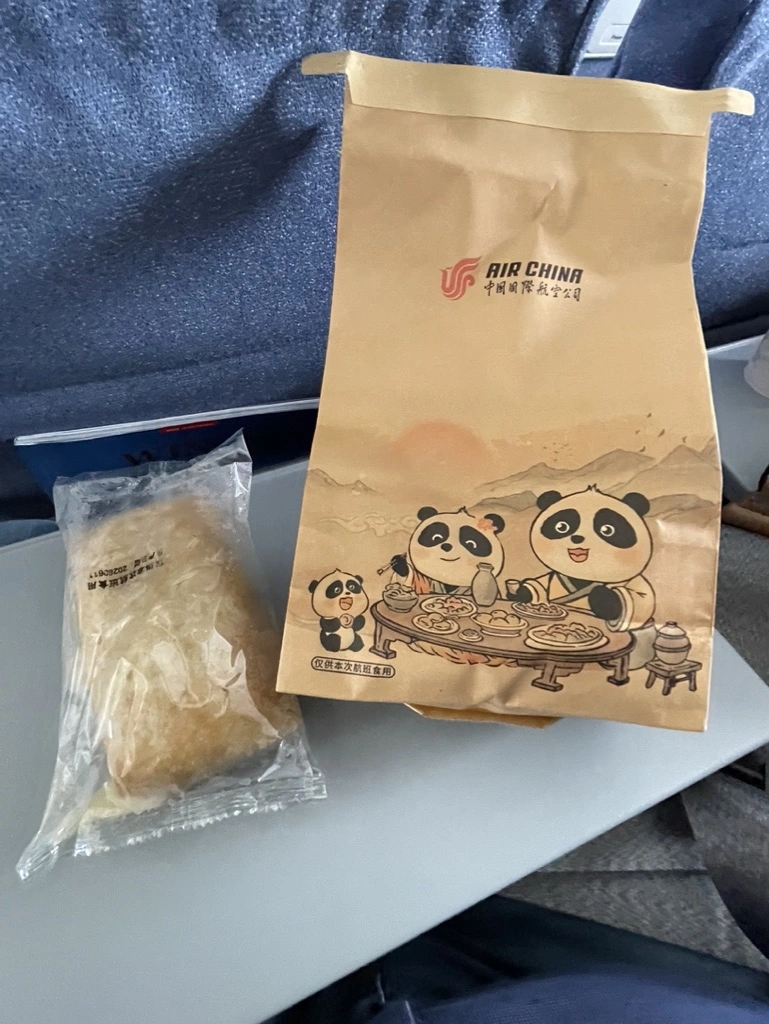
One typical Air China snack included:
- Mixed nuts
- Yoghurt
- Chocolate bread
- A moist towelette
Simple. Fresh. Adequate.
Coffee also differed slightly between the two airlines.
Air China's coffee was served in the traditional way with powdered whitener available separately. China Eastern took a different approach, serving coffee already mixed with milk and lightly sweetened. At first, it caught us by surprise. By our second cup, we had decided it actually worked rather well and undoubtedly made service much quicker for the crew.
The most memorable catering item, however, came after departing Tibet. Included with our snack was something labelled simply:
Yak Jelly.
Having travelled extensively, we're always happy to try local specialties, and this certainly qualified. It wasn't something we had expected to encounter at 35,000 feet, but it was a delightful reminder that even an airline snack can offer a glimpse into the culture and cuisine of the region you're leaving behind.
One of the pleasures of travel is discovering the unexpected, and Yak Jelly certainly earned its place on that list. Was it any good? Well, we ate a lot of Yak products while in China. Very tasty.
5. Cabin Baggage Means Exactly What It Says... Usually
Air China publishes an 8-kilogram carry-on baggage allowance, and at Beijing Capital Airport they appeared determined to enforce it. Ground staff were weighing cabin bags with some enthusiasm and authority. Several members of our group found themselves being asked to place their bags on the scales. Then something interesting happened. A few travellers quietly produced their frequent flyer cards, demonstrating elite status with Star Alliance.
Almost immediately, conversations became noticeably shorter, and the scales suddenly seemed rather less important. It was an amusing reminder that while airlines publish rules for everyone, loyalty programmes can sometimes offer a little additional flexibility.
For most travellers, however, our advice would be simple:
Pack within the published limits and you'll avoid unnecessary discussions at check-in.
6. Technology Quietly Keeps Everything Moving
One aspect of travelling through China that genuinely impressed us was how seamlessly technology supports the passenger journey.For every domestic flight, passengers first complete a facial recognition scan before entering the security screening area.The system compares your face with the passport used for the booking.Once confirmed, your boarding pass receives a prominent "Verified" stamp.
From that moment onward, your boarding pass becomes your primary travel document inside the airport.There is no repeated production of passports at every checkpoint, unlike elsewhere in China.
Boarding is quick,security flows smoothly,
7. Flying to Tibet
One of the most anticipated parts of our journey was our flight into Tibet.
We travelled aboard China Eastern Airlines, flying from Diqing to Lhasa via Kunming on a Boeing 737-700. For many visitors, Tibet represents the journey of a lifetime.
Even before reaching Lhasa, however, the experience had already become memorable.
Kunming: China's Quiet Aviation Giant
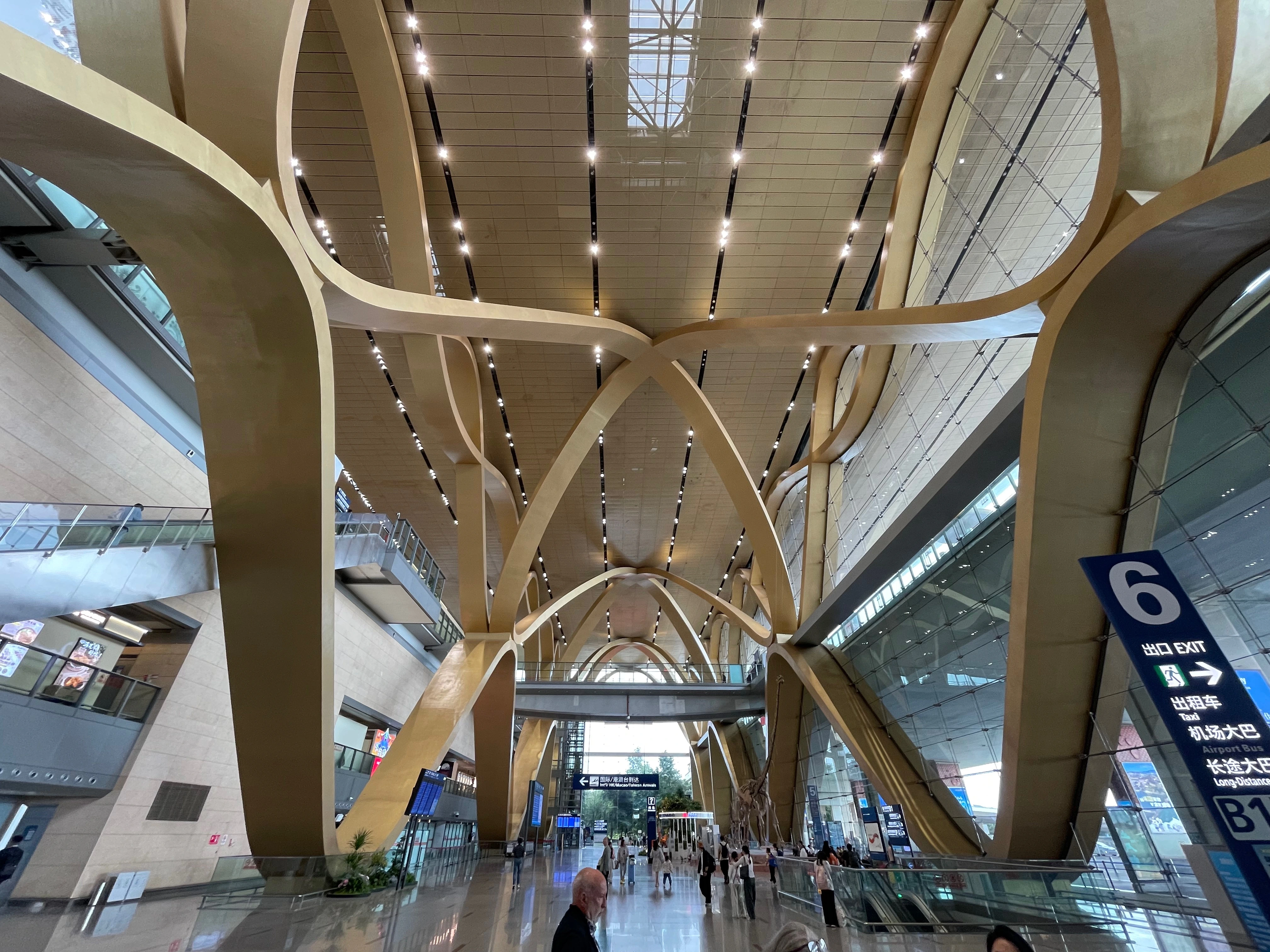
Our connection took us through Kunming Changshui International Airport.
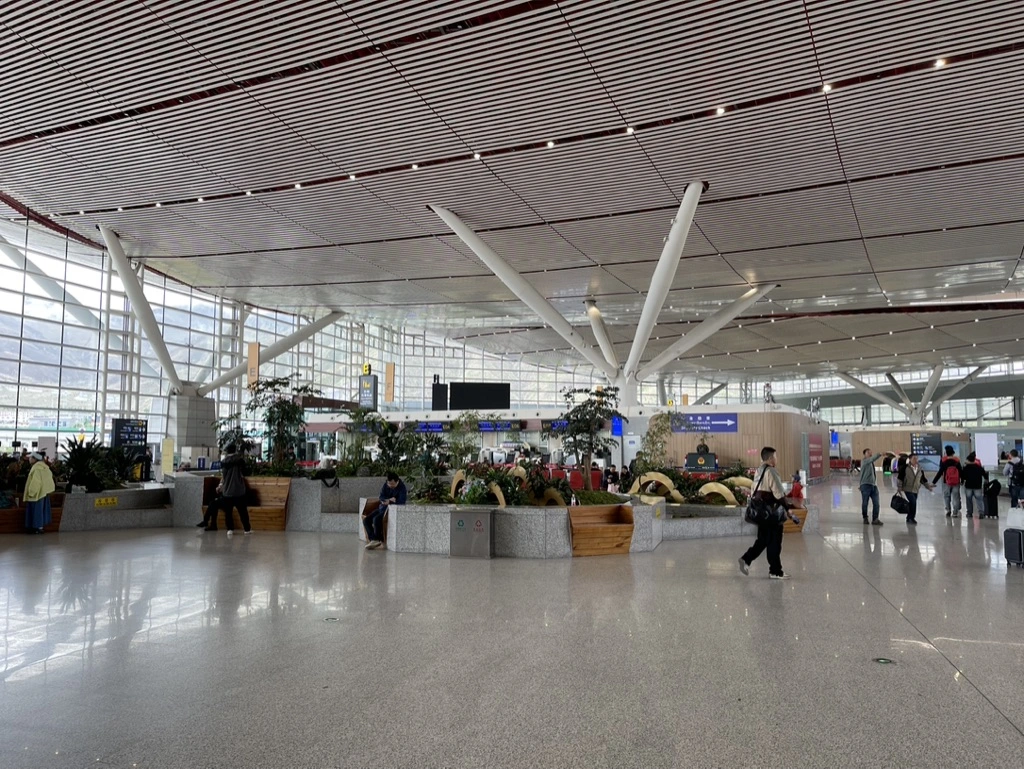
If Beijing Daxing impresses through futuristic architecture, Kunming wins through usability and sheer size.
It is a vast airport, yet surprisingly easy to navigate. Natural light fills much of the terminal, wayfinding is straightforward, and despite the large passenger numbers, the airport never felt chaotic.
We also had the opportunity to visit the China Eastern Executive Lounge. The lounge was modern, spacious, light and comfortable, offering a welcome opportunity to relax between flights with ample views of the platform. There was plenty of seating, charging points, a noodle bar, grab-and-go food, as well as a fully stocked full-service bar. It was one of the more pleasant airport lounges we experienced during our journey.
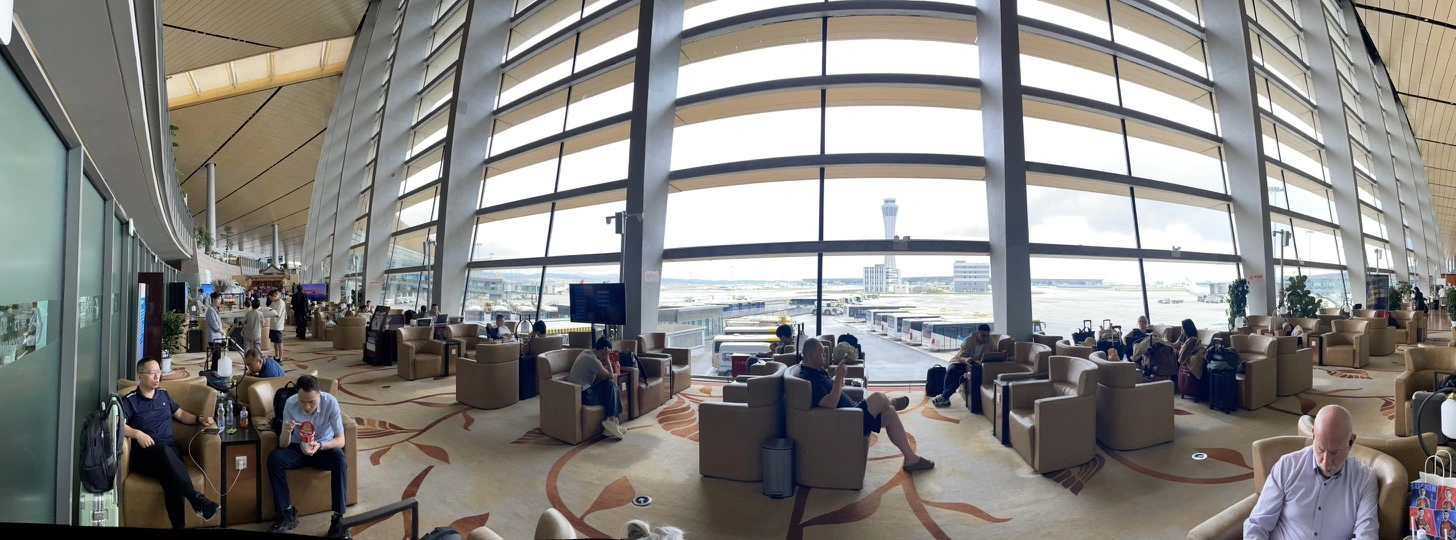
For anyone connecting through southwestern China, Kunming is an airport we would look forward to visiting again.
There is one interesting security quirk in China: Your hold baggage is scanned before it is sent to the processing hall. This scan happens immediately after check-in, and your boarding pass is held back until your bag clears. If your bag doesn't clear right away, your bag is pulled, and you have to personally open it to identify the issue. It is then rescanned until it clears. Once that happens, you are handed your boarding pass and passport. Your name appears on a screen above the check-in desk if you need to visit security. This can be confusing as much pointing and gesturing takes place before hapless foreigners understand this procedure….
Landing in Lhasa
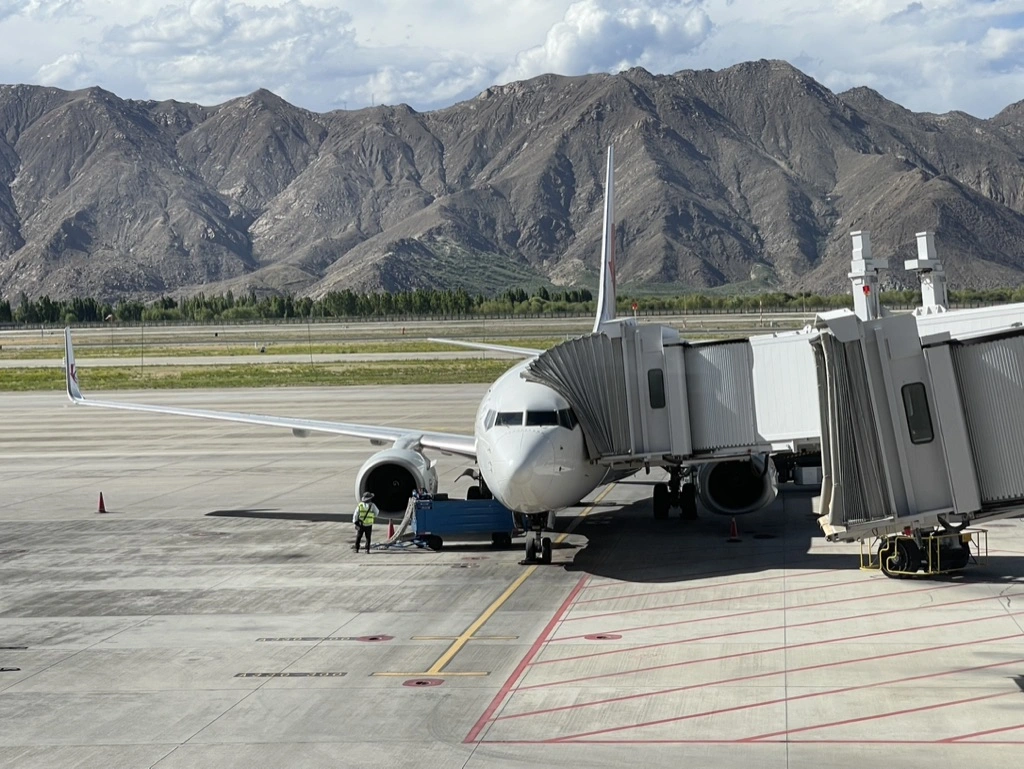
Few flights anywhere in the world approach somewhere as visually spectacular as Lhasa. The mountains of Tibet provide a breathtaking backdrop during the approach.
Normally, this would be the moment every aviation enthusiast reaches for their camera - but not here.
Shortly before landing, cabin crew reminded passengers that photography and video recording were not permitted during arrival, as Lhasa Gonggar Airport serves both civilian and military aviation, These regulations are taken (very) seriously.
As someone who enjoys documenting our travels through both photography and video, I was naturally disappointed, but once inside the terminal building and clear of the aircraft, photography was once again allowed.
Sometimes, travelling means accepting that not every moment can be captured
8. Professional Crews Every Step of the Way
Throughout our domestic journey, one characteristic remained remarkably consistent - The professionalism of the cabin crews.
Neither Air China nor China Eastern crews were particularly outgoing in the Western sense, so don't expect lengthy conversations or frequent jokes over the public address system.
Instead, what you'll find is calm confidence. Cabin announcements were lengthy, and as per Chinese rules, we were told to maintain our behaviour and that interference with the crew and the aircraft would not be tolerated. Chinese Airlines reserves the right to video your infringements.
Service was efficient. Safety procedures were followed meticulously. Requests were handled politely and there was an unmistakable sense that everyone knew exactly what their role was. Cabins were readied for landing 45 minutes before touchdown, since airport descent profiles in China are long and slow.
It's a style that may initially feel a little reserved to Western travellers. It was all a bit stoic, but never rude. Always very polite, but efficient.
9. One of Our Favourite Airport Moments
Not every memorable travel experience needs to involve famous landmarks. Sometimes it's the smallest observations that stay with you longest.
After returning from Lhasa to Kunming, we waited at baggage reclaim for our luggage.Circling endlessly around the carousel was...
...a baggage tray.
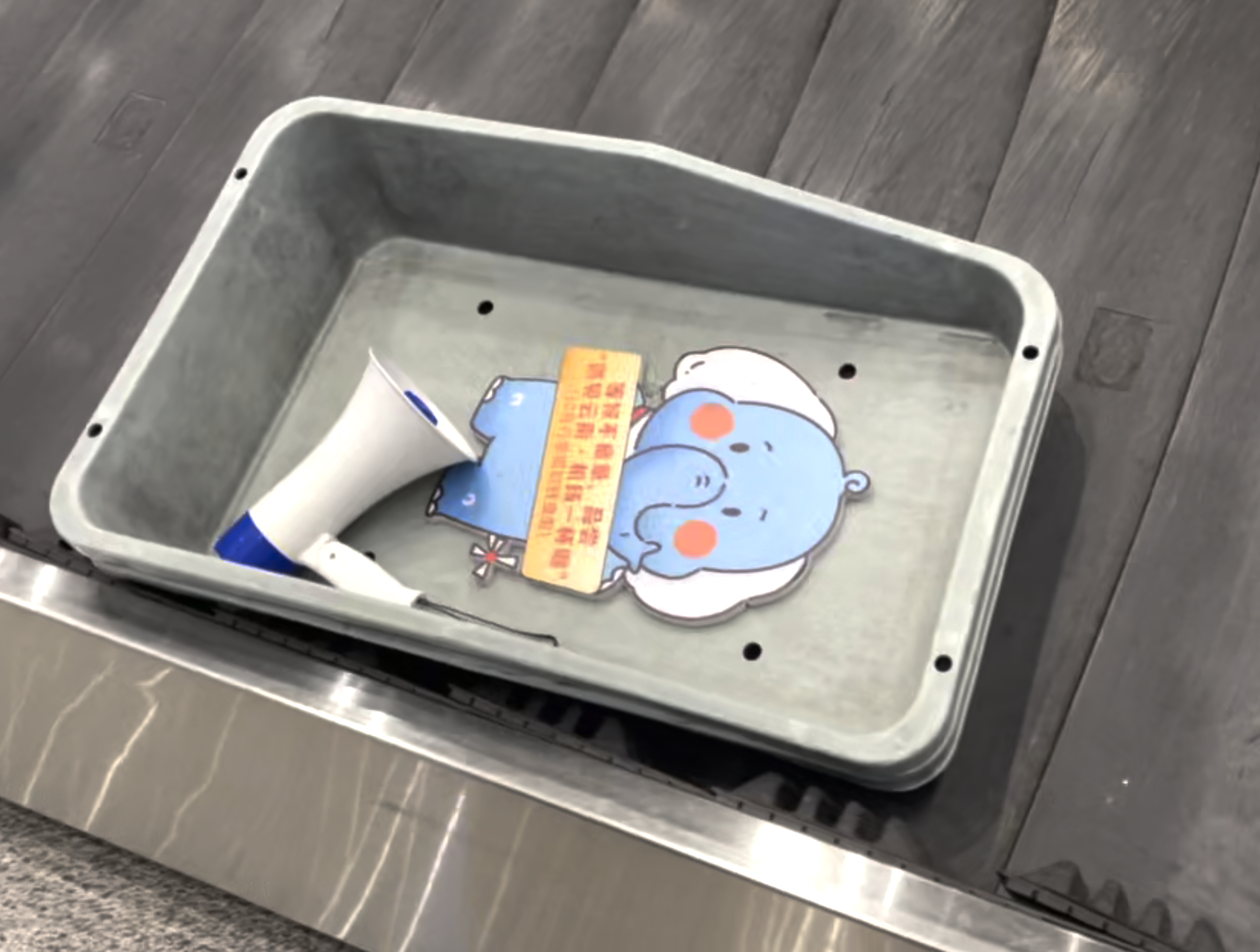
Inside it sat a portable megaphone making continuous baggage announcements. Round and round it went, broadcasting updates to everyone waiting. It was wonderfully practical. Wonderfully simple and unmistakably Chinese in its straightforward efficiency.
We've visited airports all over the world.This was a first. It's these unexpected little moments that often become the stories you remember long after you've forgotten flight numbers and departure gates.
Why Kunming Became Our Favourite Airport
By the time we departed Kunming for Shanghai, we'd developed a genuine affection for the airport. It was our third visit of the trip and It combines scale with simplicity, plus some stunning design features.
Modern architecture with intuitive design.Excellent lounges with easy passenger flow. Most importantly, it never felt stressful.That's perhaps the highest compliment one can pay an airport.
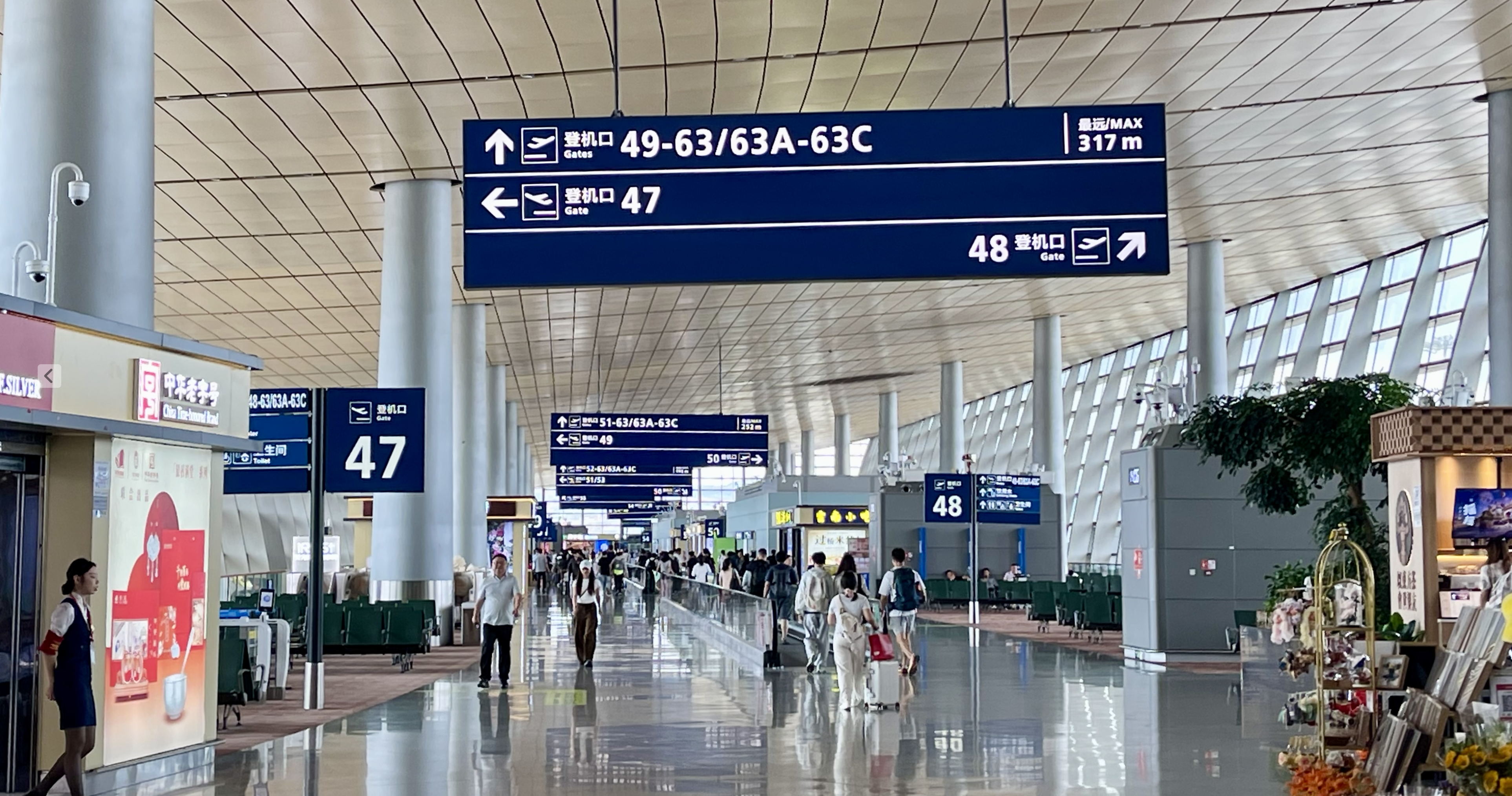
When you're travelling through a country for the first time, airports inevitably shape your impressions. Kunming consistently left us impressed.
If your itinerary through China offers a connection there, don't think of it as merely changing planes, so take a moment to enjoy one of China's most impressive aviation hubs.
10. Leaving China Was Every Bit as Efficient
Our final domestic flight took us from Kunming to Shanghai Hongqiao Airport aboard another China Eastern aircraft.
Compared with Beijing Daxing and Kunming Changshui, Hongqiao was perhaps the least visually impressive airport we visited. While it remains a busy and highly efficient gateway serving China's commercial capital, parts of the terminal are beginning to show their age.
That said, appearances can be deceiving. Like every airport we visited throughout China, Hongqiao was impeccably clean, easy to navigate and efficiently operated. Our arrival was every bit as smooth as the flights that had come before it.
After spending more than two weeks flying around China, one thing had become abundantly clear.
Consistency. Every airport, every airline and every flight seemed to follow the same disciplined approach to efficiency.
Shanghai Pudong – China's Global Gateway
Our journey home began at Shanghai Pudong International Airport, departing aboard SWISS to Zurich, and as Business Class passengers, we were invited to use the Air China Lounge before departure.
The lounge occupies two floors.The lower level is dedicated primarily to relaxation, offering comfortable seating areas and quiet spaces to unwind before a long-haul flight. Upstairs you'll find the dining area, with a respectable selection of hot and cold dishes, beverages and light refreshments.The lounge was clean, comfortable and perfectly functional.
What it wasn't was memorable.Unlike many flagship airline lounges around the world, it lacked natural light and offered no views of the airport apron. For aviation enthusiasts like us, watching aircraft movements is part of the lounge experience, and this was one opportunity the designers had missed. Would we use it again? Yes. Would we arrive early just to spend extra time there? No.
Prepare for a Walk
Shanghai Pudong's Terminal 2 deserves a mention for one simple reason. It is enormous.Stretching approximately 1.4 kilometres beneath a single roof, it ranks among the world's larger airport terminals. Even with numerous moving walkways, the distances between security, lounges and departure gates can be considerable, so allow yourself a little extra time.
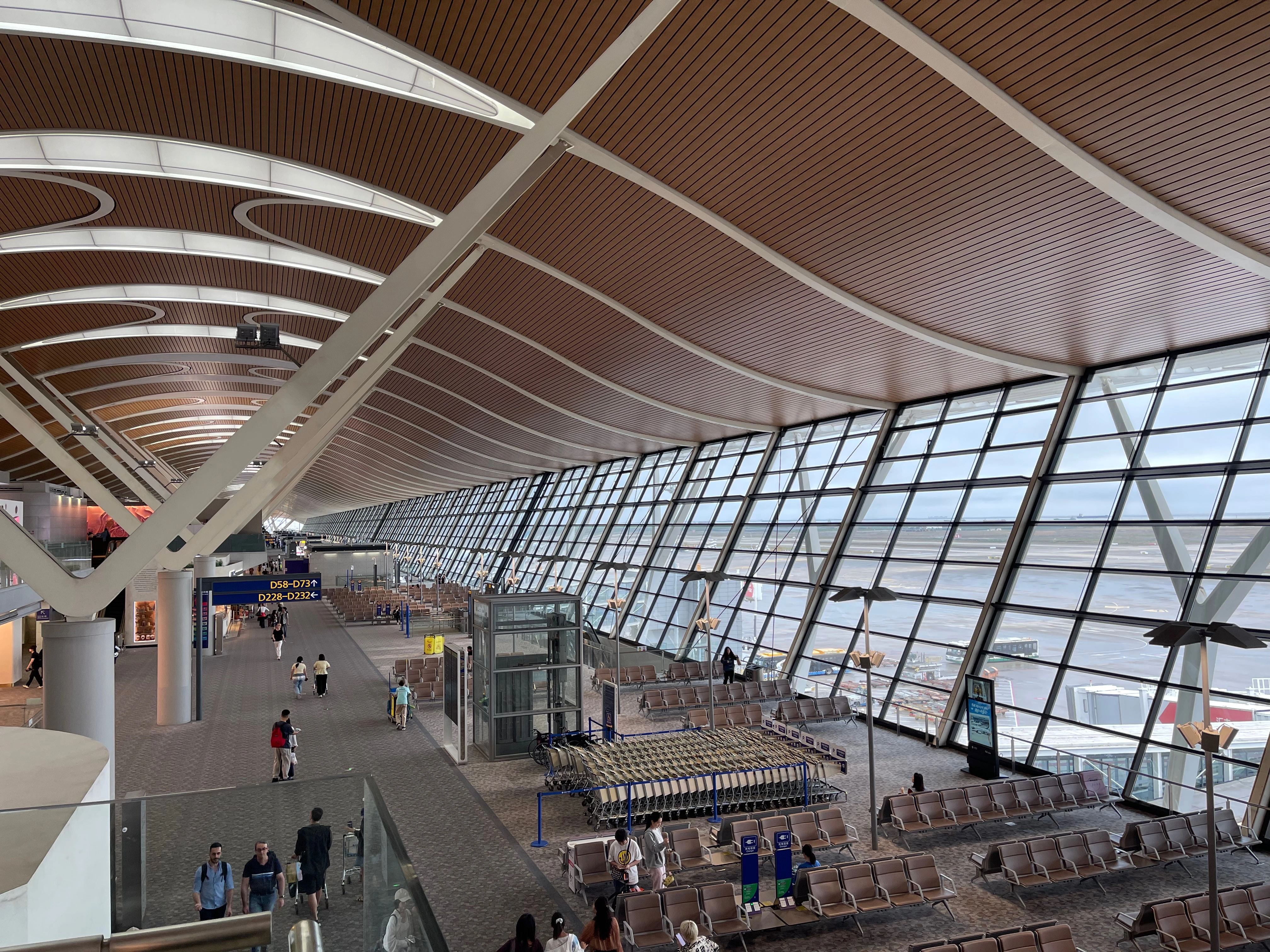
Departing China
Leaving China proved every bit as straightforward as entering it.Passengers first complete another facial recognition scan before proceeding to passport control.An immigration officer then verifies your passport, applies the exit stamp and wishes you a pleasant journey.There were no lengthy interviews.No unnecessary delays.Within minutes we found ourselves back airside, ready for the journey home.
Having heard so many stories about complicated procedures before travelling, we were pleasantly surprised by just how efficient the entire process proved to be.
Frequently Asked Questions About Flying in China
Is flying in China safe?
Based on our experience, absolutely. China's aviation safety record has improved dramatically over the last 20 years.
Throughout our journey we flew aboard modern, well-maintained (Western) aircraft operated by Air China and China Eastern Airlines. Cabin crews demonstrated a consistently professional approach to safety, while airport operations felt organized and highly disciplined.
We never once felt uncomfortable or uncertain during any stage of our journey.
Do Chinese airlines serve meals on domestic flights?
Yes—and this was one of our biggest surprises.
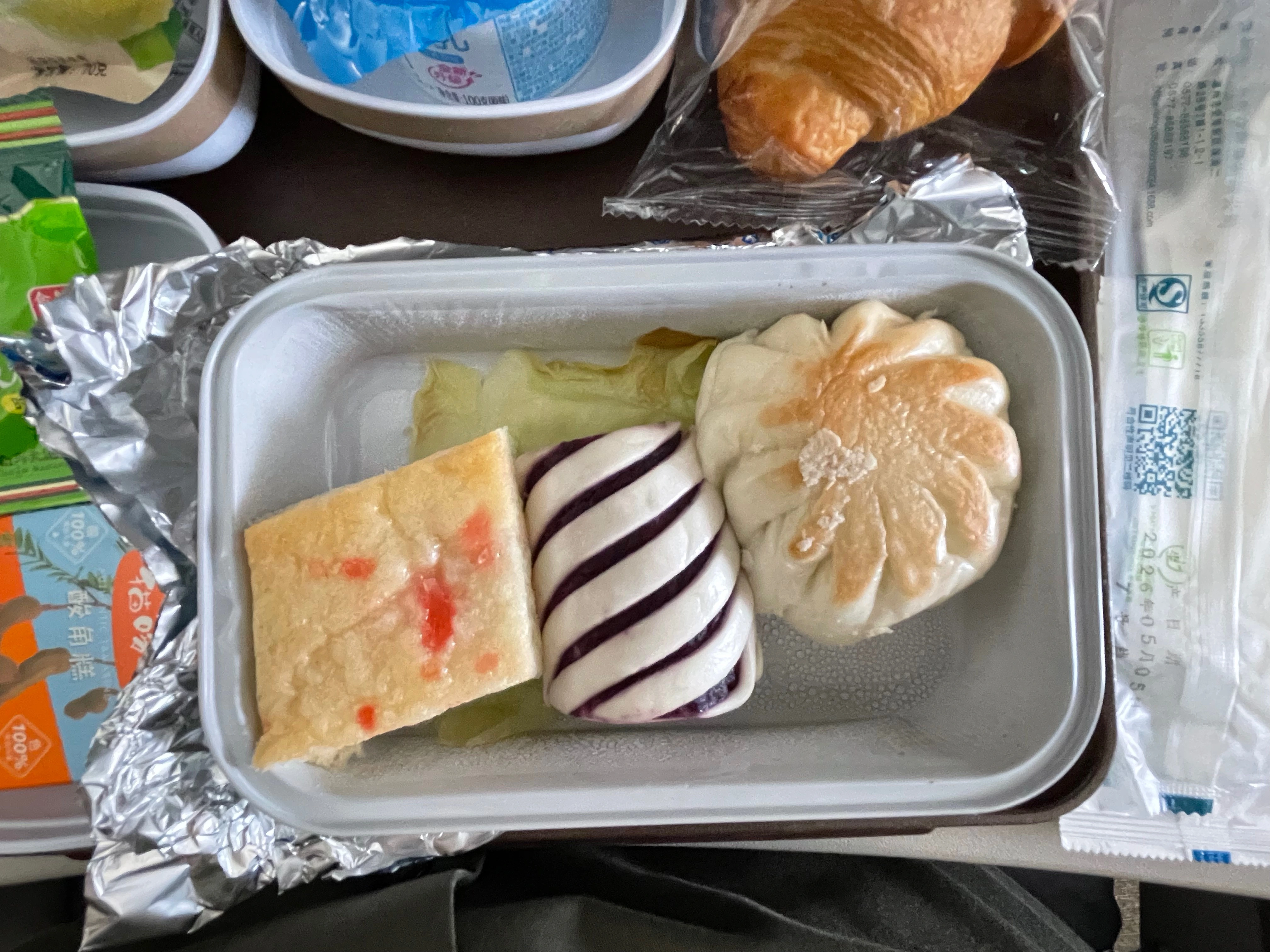
With the exception of our shortest flight, complimentary snacks or light meals were served on every domestic sector.The catering was simple but thoughtfully prepared, fresh and of good quality. It's refreshing to see airlines still recognizing that hospitality doesn't have to disappear simply because a flight is relatively short.
Is entering China difficult?
Not in our experience. Completing the online arrival declaration before departure made the process straightforward.
Although the biometric kiosks didn't successfully recognize either of us, immigration officers processed our arrival manually without any fuss. The entire arrival process was calm, orderly, polite, and considerably quicker than we had anticipated.
Do I need a visa to visit China?
Visa requirements depend entirely on your nationality and can change at any time. During our visit, both an EU passport holder and a Canadian passport holder were able to enter China without obtaining a visa beforehand.
Always confirm the latest entry requirements before making travel plans, as immigration policies are regularly updated.
Is English widely spoken?
English proficiency varies. At major international airports, signage in English is excellent and easy to follow. Not every member of airline or airport staff speaks fluent English, but we consistently found people to be patient, courteous and eager to help. We found that more senior staff had a better command of English than junior staff.
A smile—and occasionally pointing to a menu—goes a long way.
Should tall travellers be concerned about Economy Class?
If you're particularly tall, it's worth managing your expectations.
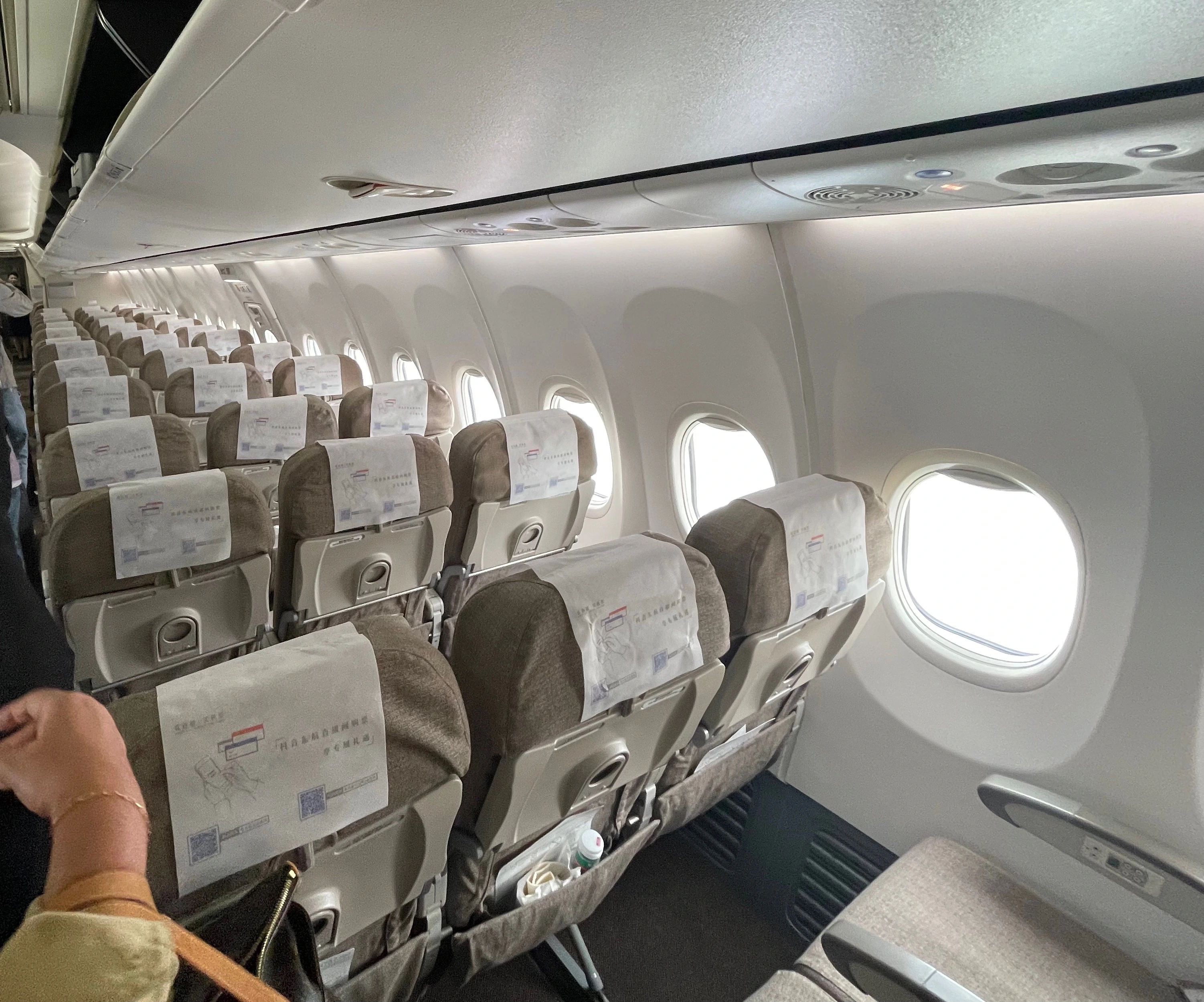
Economy seating aboard both Air China and China Eastern is comparable to many European airlines. Legroom is adequate for flights of a few hours, though travellers over six feet may appreciate standing and stretching whenever the opportunity arises.
Fortunately, China's excellent rail network offers another comfortable option for longer journeys—a topic we'll be exploring in a future blog.
Our Final Thoughts
Before travelling to China, we expected impressive scenery, fascinating history and unforgettable cultural experiences.
What we didn't expect was to be equally impressed by the country's aviation system.
From the architectural wonder of Beijing Daxing to the relaxed efficiency of Kunming Changshui, from complimentary catering on domestic flights to spotless terminals and remarkably organized airport procedures, flying within China proved to be one of the easiest parts of our entire journey.
Were there cultural differences?
Certainly.
Service tended to be more formal than many Western travellers might expect.
Language occasionally required a little patience.
Airport terminals can involve some serious walking. But these are observations rather than criticisms. In every meaningful way, China's airlines and airports exceeded our expectations.
Would we fly Air China again?
Without hesitation.
Would we choose China Eastern for domestic travel?
Absolutely.
Would we encourage travellers not to be intimidated by flying within China?
Most definitely.
Sometimes the biggest surprise in travel isn't discovering that something is different. It's discovering that it's much better than you imagined.
Planning Your Own Journey to China?
China is one of those destinations that rewards careful planning.
Whether you're interested in the futuristic skylines of Shanghai, the imperial history of Beijing, the dramatic landscapes of Yunnan, the spiritual heritage of Tibet or a journey combining China with nearby destinations such as Japan, Vietnam or South Korea, thoughtful itinerary design can make all the difference.
At Gin & Tonic Travel, we believe great travel begins long before you board the aircraft. Having recently experienced China's airports, airlines and entry procedures firsthand, we can offer practical advice that goes beyond guidebooks and online forums.
We'll help you understand the latest entry requirements, select the most suitable flights, choose hotels that match your travel style and build an itinerary that balances iconic sights with authentic local experiences.
Because luxury isn't measured by how much you spend - It's measured by the quality of the experience you enjoy.